
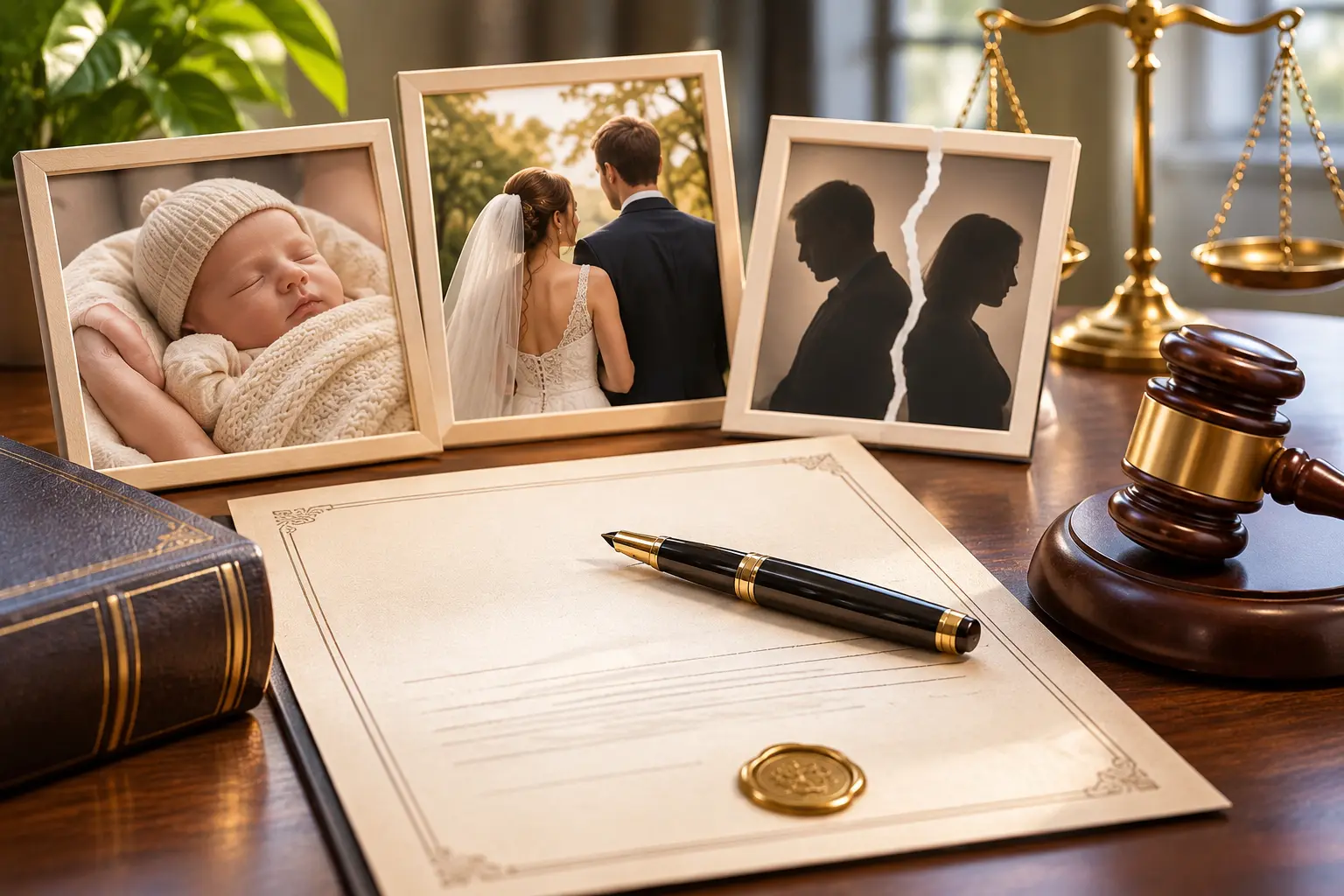
A will is written for the family you have on the day you sign it. Then life moves on: a grandchild arrives, a child marries, you remarry, or a marriage ends. The will in the filing cabinet stays the same, and the gap between what it says and what you want quietly grows.
Texas law fills in some of those gaps automatically, but not always the way people expect. A divorce removes some provisions and leaves others in place. A new grandchild may inherit nothing unless the will says otherwise, and a minor cannot simply take a large inheritance outright. This guide explains how major family changes affect a Texas will, what the law does on its own, what it does not do, and when a review with a wills attorney in Tyler, TX makes sense.
A New Grandchild (or Child): What Changes?
Short answer: Usually nothing changes automatically for grandchildren. If you want a grandchild to inherit directly, or want to control how a gift to a young grandchild is managed, your will needs to say so.
Grandchildren generally inherit through their parents
Many wills leave property to “my children.” If one of your children dies before you, Texas law generally passes that child’s share to his or her descendants, usually your grandchildren, unless the will says something different. But if all your children survive you, grandchildren receive nothing under that kind of will. Grandparents who want to help with college or set something aside directly need to include those gifts.
Minors cannot manage an inheritance
A child under 18 generally cannot take control of significant property. If a will leaves money outright to a minor, the family may need a court-supervised guardianship of the estate or another arrangement to manage it. A better approach is to leave the gift in a trust or to a custodian, with instructions about how it can be used and at what age the grandchild receives it outright.
A new child of your own
Texas has rules for children born or adopted after a will is signed who are not mentioned or provided for, and the result can surprise the rest of the family. Updating the will after a birth or adoption avoids that uncertainty and lets you name a guardian for the new child.
Getting Married: Does Your Old Will Still Work?
Short answer: In Texas, marriage does not automatically cancel an existing will. A will signed before the wedding stays valid, but it may leave nothing to your new spouse or may still name people you no longer intend to benefit.
Three issues come up often:
- Community property. Texas is a community property state. You can generally leave only your separate property and your half of the community property by will. A new spouse already owns the other half of the community.
- Blended families. If you have children from a prior relationship, a simple “everything to my spouse” will may mean your children receive nothing if your spouse later changes his or her own will. A trust can provide for a spouse during life and then pass property to your children.
- Agents and executors. Marriage is a good time to revisit who serves as executor and who holds your financial and medical powers of attorney.
When your adult child marries
Your child’s marriage can matter too. If you want an inheritance to stay your child’s separate property, rather than becoming mixed with marital assets, a trust in your will can help protect it.
Going Through a Divorce: What Texas Revokes and What It Doesn’t
Short answer: When a Texas divorce is final, provisions in your will in favor of your former spouse are generally treated as revoked, as if the former spouse had died before you. Some other documents and accounts may not update the same way, so a full review is still important.
What this means in practice:
- Your will. Gifts to your former spouse, and an appointment of your former spouse as executor or trustee, are generally removed by law after the divorce. Gifts to your former spouse’s relatives who are not related to you are generally removed as well.
- Beneficiary designations. Life insurance, retirement accounts, and payable-on-death accounts pass by their own beneficiary forms, not your will. Texas has rules that can affect some of these after divorce, but federal law can override them for certain employer plans. Update every form directly.
- During the divorce. None of the automatic rules apply until the divorce is final. If you die while the case is pending, your existing will controls. Ask your divorce lawyer whether you can and should change your will while the case is underway.
Don’t leave a gap
If the old will left everything to a former spouse and now that gift fails, who receives the property? The answer depends on the rest of the will and Texas default rules. A new will after divorce lets you decide.
Other Reasons to Review, and How to Make Changes
Beyond births, marriages, and divorces, consider reviewing your will after:
- The death or incapacity of an executor, trustee, or guardian you named
- A move to Texas from another state
- Buying property in another state, a business, or a major new asset
- A child or grandchild developing a disability, which can affect eligibility for public benefits
- Significant changes in tax law or the size of your estate
Codicil or new will?
A codicil is a formal amendment signed with the same formalities as a will. It works for small changes, such as swapping an executor. For larger changes, such as after a divorce or remarriage, a new will is usually cleaner and avoids confusion about which provisions remain. Handwritten notes in the margin of a signed will generally do not change it and can cause disputes.
A quick check for this year
- Does your will name the right executor and backup?
- Are minor children or grandchildren covered by a trust or custodian, not outright gifts?
- Do your beneficiary designations match your plan?
- Are your powers of attorney and medical documents current?
When to Talk With a Wills Attorney
Consider a review with an attorney after any major family change, and right away if you are divorcing, remarrying with children from a prior relationship, or planning gifts to young grandchildren. An attorney can explain whether a will alone is enough or whether a trust fits better; the firm’s guide to the difference between a will and a trust covers the trade-offs. Parents and grandparents may also want to learn how guardianship works in Texas for minors who inherit. The Goodson Firm’s Texas estate planning services include wills, trusts, powers of attorney, and guardianship planning.
Frequently Asked Questions
Does getting married revoke my will in Texas?
No. A will signed before marriage generally remains valid in Texas. It may not provide for your new spouse, so review it after the wedding.
Can I leave money directly to my grandchildren?
Yes, but a minor generally cannot manage a significant inheritance. Leaving the gift in a trust or to a custodian avoids the need for a court-supervised arrangement.
Do I need a new will after divorce if Texas revokes gifts to my ex?
It is still wise. The law removes provisions for your former spouse, but it does not decide who you want to receive that share, and it may not update every beneficiary designation.
Make Your Will Match Your Family Today
A new grandchild, a marriage, or a divorce can change what your will should say, and Texas law only fills some of the gaps. Marriage does not cancel an old will, divorce removes gifts to a former spouse but leaves other questions open, and gifts to young grandchildren work best through a trust or custodian. Checking your beneficiary designations alongside your will keeps the whole plan consistent.